

2026 has crept in with all the grace of a bedbug. At the time of writing this, I am in Hampi, India, which is objectively a climber’s paradise. The days here are filled with thali-eating, siesta snoozing, and climbing galore. It is a haven of brilliant rock formations, with huge boulder fields stretching for miles in all directions. It does make one rethink the foundational questions of human existence. As in, surely giants roamed here?
Most days are spent climbing, eating, resting or waiting for skin to heal. It is when the afternoon sun recedes that we head out, commencing the long walk through lush green paddy fields, slippery rock plateaus, and menacing cacti until we reach the crag. On a good day, warm-ups are slow as we stretch on the mats and nibble on chikki snacks.
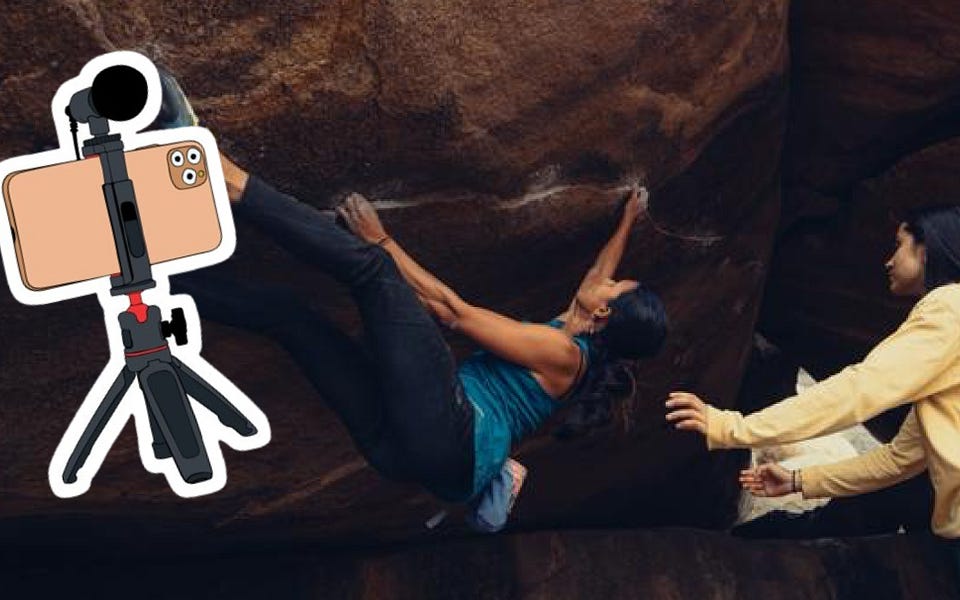
What marks the beginning of the serious “send” attempts is the clumsy placement of the tripod and iPhone. Hence begins the frantic deletion of earlier videos to free up storage space because, well, if the climb wasn’t filmed, uploaded, and looked at, was it even climbed at all?
This trip has brought to the fore the mismatched clash of social media and climbing. Of course, we are proud of sending our hardest projects and take some joy in sharing this with the climbing world. And climbing is an exceptionally looky sport, where micro-beta and body positioning can make all the difference in ascending a boulder. But lookiness does appear to have entered a new age, in which brand sponsorships depend on social media following, and Alex Honnold will soon ascend a Taiwanese skyscraper in front of millions, live on Netflix.
In all the tripod fumbling and delayed starts so the designated camerawoman can press “record,” Instagram is an undeniably crude insertion into our days. This is even more apparent upon posting later that evening, when I ashamedly sit, stare, and bask in the hundred tiny dopamine highs of every “like”, each in the shape of a red heart. Climbing used to be a counterculture, people did it precisely because it rejected commercialism and outside validation. The experience mattered more than the audience. That spirit feels like it’s slipping away.
But cultures develop, and “Instagramming” climbing is a virtual space that comes with vast potential for good. Hampi itself is a world-class destination that still seems to lack acceptance within the Western climbing world. It certainly deserves the same lookiness and appreciation we grant to Albarracín or Fontainebleau, and perhaps wider social media coverage is one way to achieve this. But what is the line between championing Hampi and championing myself? Or the line between innocent sharing and masked vanity? Questions about social media and sport descend into a sticky philosophical mess.
In all this, I don’t think I reject Instagram, but I do want to develop a healthier relationship with it - one where social media is a secondary, temporal mirror of appreciation for a moment that was beautiful in real time.